Special Session 1
Deep Reinforcement Learning for Intelligent Control and Automation Engineering
Introduction: Modern automation engineering is undergoing a profound transformation driven by the increasing complexity and scale of systems such as smart grids, intelligent manufacturing, connected vehicles, and robotic networks. These systems exhibit high dimensionality, real-time constraints, deep uncertainty, and strong cyber-physical coupling, posing significant challenges to traditional model-based control and rule-based decision-making approaches in terms of adaptability, resilience, and optimality.
Recent advances in artificial intelligence, particularly deep reinforcement learning (DRL), offer a promising paradigm for addressing these challenges. By integrating the representation capability of deep neural networks with the sequential decision-making framework of reinforcement learning, DRL enables data-driven control and optimization through interaction with complex environments, even under incomplete models and evolving dynamics. This paradigm has demonstrated significant potential in applications such as real-time energy management, robotic control, and intelligent industrial scheduling.
This special session aims to provide an international forum for researchers and practitioners at the intersection of DRL, intelligent control, and automation engineering. The scope spans fundamental theory and practical applications, including DRL for optimal and adaptive control, model-free and model-based methods for cyber-physical systems, multi-agent DRL for distributed automation, safe and robust learning, and sim-to-real transfer for robotic systems. Application areas include smart grids, intelligent manufacturing, autonomous vehicles, robotic systems, and process automation. The session aims to bridge AI and control engineering, foster interdisciplinary collaboration, and advance next-generation intelligent automation systems.
Organizers:
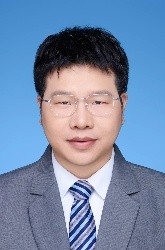 |
Xinghua Liu, Xi'an University of Technology, ChinaXinghua Liu is a Professor and Ph.D. Supervisor at Xi’an University of Technology, as well as a National Young Talent, a recipient of the Shaanxi Distinguished Young Scholars Fund, and a High-Level Talent of Shaanxi Province. He leads the Shaanxi Provincial University Youth Innovation Team and serves as Director of the Shaanxi Provincial University Talent Introduction Base, as well as Director of the Xi’an Key Laboratory of Cyber-Physical Power System Operation and Control. His research interests include networked control systems, state perception and security control for next‑generation power systems, resilience enhancement, and optimal dispatch of integrated energy systems. He has published over 140 SCI‑indexed papers, including more than 70 in leading IEEE Transactions and top‑tier energy journals, with 10 papers recognized as ESI Highly Cited Papers. He has authored 2 English monographs, holds 14 invention patents, and has led or co‑led 24 research projects. He has received two provincial/ministerial-level scientific and technological awards, as well as 14 other academic research and science competition awards. He is a Senior Member of IEEE and an active contributor to the international academic community, serving as a Technical Program Committee member, session chair, and conference organizer for numerous international events. |
 |
Bangji Fan, Xi'an University of Science and Technology, ChinaBangji Fan received the Ph.D. degree in electrical engineering from Xi'an University of Technology, Xi'an, China, in 2025. He joined Xi’an University of Science and Technology in 2026, where he is currently a Lecturer at the school of electrical and control engineering. He has led the Talent Introduction Project of Xi’an University of Science and Technology and participated in one general project of the National Natural Science Foundation of China. His research interests include power system resilience and intelligent decision-making methods, with a particular focus on deep reinforcement learning and active distribution system restoration. He has published 18 SCI/EI-indexed papers, including 8 articles in leading IEEE Transactions and top-tier journals such as IEEE TSMC, IEEE TSG, and IEEE TAI. He also holds one granted national invention patent. He serves as a reviewer for several reputable international journals, including Applied Energy, IEEE Transactions on Transportation Electrification, IEEE Transactions on Artificial Intelligence, and Measurement. |
 |
Guangyu Song, Xi'an University of Technology, ChinaGuangyu Song received the Ph.D. degree in electrical engineering from Xi'an University of Technology, Xi'an, China, in 2025. In 2026, he joined the School of Electrical Engineering, Xi'an University of Technology, Xi'an, China. He is currently a teacher and Postdoctoral Researcher, and a member of the China Electrotechnical Society (CES), the Chinese Society for Electrical Engineering (CSEE), and the China Power Supply Society (CPSS). His research interests include hybrid energy storage systems, photovoltaic generation systems, power converter control, energy storage conversion and control, and grid-forming control. He has published 13 SCI/EI-indexed papers in IEEE TIE, TPE, TTE, and other well-known journals, both domestically and internationally (including 5 papers published in IEEE Transactions Series). He participated in the National Natural Science Foundation of China, the Shaanxi Provincial Natural Science Foundation, and many horizontal projects. |
Submission Guideline:
Please submit your manuscript via Online Submission System: https://easychair.org/conferences/?conf=rcae2026
Please choose "Special Session 1"